

 CN
CN
Product Categories
--No product--




News
Trends in Food Development Combining Phospholipids and Lipid Microencapsulation Technology
Time:2025-11-10
1. Introduction
With the continuous evolution of food science and technology, phospholipids have emerged as a versatile class of natural amphiphilic molecules widely used in formulation design. Their ability to form stable interfaces, encapsulate active compounds, and construct complex colloidal systems has made them a focus of modern food research. When combined with lipid microencapsulation technology, phospholipids open new opportunities for improving ingredient stability, controlled release, and product innovation in food development.
2. Structural Features of Phospholipids
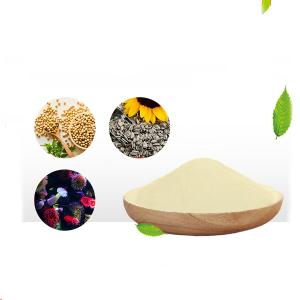
Phospholipids consist of hydrophilic phosphate head groups and hydrophobic fatty acid tails, enabling them to self-assemble into bilayers, vesicles, or micelles. These structures allow phospholipids to function as emulsifiers and structural stabilizers in multiphase systems. Different sources—such as soybean, sunflower, or egg yolk phospholipids—exhibit variations in fatty acid composition, polarity, and physical behavior, making them adaptable to diverse food formulations.
3. Lipid Microencapsulation Technology Overview
Lipid microencapsulation involves enclosing sensitive or functional ingredients within a lipid-based shell to form microscale particles. This technique protects encapsulated materials from environmental factors such as oxygen, light, and heat, while allowing for controlled release during processing or storage. In the food industry, lipid microcapsules are applied in the stabilization of flavors, natural pigments, and lipid-soluble nutrients, contributing to product consistency and quality.
4. Synergistic Role of Phospholipids in Microcapsule Systems
Integrating phospholipids into lipid microencapsulation systems enhances membrane flexibility and interfacial stability. Phospholipids act as emulsifying agents that improve the dispersion of core materials within lipid matrices, leading to finer particle size and uniform encapsulation. Moreover, their electrostatic and structural characteristics allow for tunable surface properties, enabling microcapsules to perform optimally in various food matrices such as emulsions, powders, and beverages.
5. Applications in Modern Food Formulation
The combination of phospholipids and lipid microencapsulation has been explored in multiple food categories. Examples include encapsulating oil-based flavors in plant-based beverages, stabilizing lipid-soluble bioactives in dairy alternatives, and retaining aroma compounds in baked goods. These applications emphasize not only physical stability but also improved ingredient compatibility and processing adaptability in complex food systems.
6. Future Research Directions
Future food development will increasingly focus on sustainable phospholipid sources, eco-friendly encapsulation methods, and intelligent release mechanisms. Research is moving toward designing responsive microcapsules that react to pH, temperature, or enzymatic triggers, aligning with trends in personalized nutrition and functional food innovation. Interdisciplinary studies integrating materials science, process engineering, and food chemistry will further refine the use of phospholipid-based lipid microcapsules.
7. Conclusion
The combination of phospholipids and lipid microencapsulation technology represents a promising direction in modern food development. By merging the structural advantages of phospholipids with advanced encapsulation strategies, researchers and manufacturers can create foods with enhanced stability, tailored textures, and innovative delivery systems. This integrated approach is poised to drive the next generation of high-performance, sustainable, and technically sophisticated food products.
With the continuous evolution of food science and technology, phospholipids have emerged as a versatile class of natural amphiphilic molecules widely used in formulation design. Their ability to form stable interfaces, encapsulate active compounds, and construct complex colloidal systems has made them a focus of modern food research. When combined with lipid microencapsulation technology, phospholipids open new opportunities for improving ingredient stability, controlled release, and product innovation in food development.
2. Structural Features of Phospholipids
Phospholipids consist of hydrophilic phosphate head groups and hydrophobic fatty acid tails, enabling them to self-assemble into bilayers, vesicles, or micelles. These structures allow phospholipids to function as emulsifiers and structural stabilizers in multiphase systems. Different sources—such as soybean, sunflower, or egg yolk phospholipids—exhibit variations in fatty acid composition, polarity, and physical behavior, making them adaptable to diverse food formulations.
3. Lipid Microencapsulation Technology Overview
Lipid microencapsulation involves enclosing sensitive or functional ingredients within a lipid-based shell to form microscale particles. This technique protects encapsulated materials from environmental factors such as oxygen, light, and heat, while allowing for controlled release during processing or storage. In the food industry, lipid microcapsules are applied in the stabilization of flavors, natural pigments, and lipid-soluble nutrients, contributing to product consistency and quality.
4. Synergistic Role of Phospholipids in Microcapsule Systems
Integrating phospholipids into lipid microencapsulation systems enhances membrane flexibility and interfacial stability. Phospholipids act as emulsifying agents that improve the dispersion of core materials within lipid matrices, leading to finer particle size and uniform encapsulation. Moreover, their electrostatic and structural characteristics allow for tunable surface properties, enabling microcapsules to perform optimally in various food matrices such as emulsions, powders, and beverages.
5. Applications in Modern Food Formulation
The combination of phospholipids and lipid microencapsulation has been explored in multiple food categories. Examples include encapsulating oil-based flavors in plant-based beverages, stabilizing lipid-soluble bioactives in dairy alternatives, and retaining aroma compounds in baked goods. These applications emphasize not only physical stability but also improved ingredient compatibility and processing adaptability in complex food systems.
6. Future Research Directions
Future food development will increasingly focus on sustainable phospholipid sources, eco-friendly encapsulation methods, and intelligent release mechanisms. Research is moving toward designing responsive microcapsules that react to pH, temperature, or enzymatic triggers, aligning with trends in personalized nutrition and functional food innovation. Interdisciplinary studies integrating materials science, process engineering, and food chemistry will further refine the use of phospholipid-based lipid microcapsules.
7. Conclusion
The combination of phospholipids and lipid microencapsulation technology represents a promising direction in modern food development. By merging the structural advantages of phospholipids with advanced encapsulation strategies, researchers and manufacturers can create foods with enhanced stability, tailored textures, and innovative delivery systems. This integrated approach is poised to drive the next generation of high-performance, sustainable, and technically sophisticated food products.