

 CN
CN
Product Categories
--No product--



News
Thermal Stability and Modification Methods of Phospholipids in Food Processing
Time:2025-11-14
1. Introduction
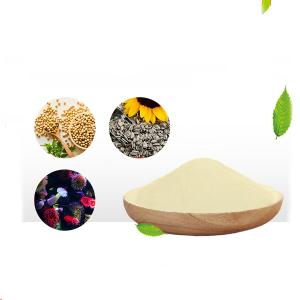
Phospholipids are amphiphilic molecules widely present in plant and animal sources, including soybeans, egg yolk, sunflower seeds, and rapeseed. In food processing, they are used as emulsifiers, dispersing agents, and structural stabilizers. However, during thermal processing—such as baking, frying, or spray drying—phospholipids can undergo structural changes that affect their functional properties. Understanding their thermal stability and exploring modification methods is essential for optimizing food formulations and maintaining product quality.
2. Structural Characteristics and Thermal Sensitivity
Phospholipids consist of a glycerol backbone, fatty acid chains, and a polar phosphate-containing head group. Their thermal behavior is influenced by:
Fatty acid composition: Phospholipids with unsaturated fatty acids are more prone to oxidation and chain degradation.
Degree of saturation: Saturated fatty acid chains improve thermal resistance.
Headgroup type: The polar head affects interfacial behavior and stability under heat.
High-temperature processing can cause hydrolysis, oxidation, or phase separation, leading to changes in emulsification performance or dispersion behavior.
3. Factors Affecting Thermal Stability in Food Processing
Several factors influence phospholipid stability during food processing:
Temperature and heating duration: Prolonged heating increases the risk of decomposition.
pH and ionic strength: Acidic or highly ionic environments can accelerate hydrolysis.
Interaction with other food components: Proteins, carbohydrates, and polyphenols may interact with phospholipids, altering thermal behavior.
Moisture and oxygen exposure: High water activity or oxygen can enhance lipid oxidation.
Optimizing processing parameters is critical for preserving phospholipid functionality in thermally treated foods.
4. Modification Methods to Enhance Thermal Stability
To improve phospholipid performance under thermal conditions, several modification approaches are employed:
Hydrogenation
Partial or full hydrogenation converts unsaturated fatty acids to saturated forms, enhancing thermal and oxidative stability. Hydrogenated phospholipids are commonly used in baked goods, fried foods, and spray-dried powders.
Enzymatic Modification
Enzymes such as phospholipases or lipases can selectively hydrolyze or re-esterify phospholipid molecules, adjusting polarity, melting point, and interfacial behavior. Enzymatic methods are mild, controllable, and environmentally friendly.
Chemical Ester Exchange
Esterification or transesterification alters fatty acid chain length or saturation, optimizing melting characteristics and thermal behavior for specific food applications, such as margarines or structured lipids.
Physical Coating and Complexation
Phospholipids can be combined with polysaccharides, proteins, or inorganic carriers to form protective layers. This improves heat resistance and dispersion stability in high-temperature processing.
5. Analytical Methods for Thermal Stability Evaluation
Several techniques are used to assess phospholipid stability:
Differential Scanning Calorimetry (DSC): Determines phase transition temperatures and thermal energy changes.
Fourier Transform Infrared Spectroscopy (FTIR): Detects structural changes in functional groups.
Thermogravimetric Analysis (TGA): Evaluates decomposition temperatures and residual mass.
Chromatography and Mass Spectrometry (HPLC, GC-MS): Identifies oxidation or hydrolysis products.
These methods guide modification strategies and process optimization.
6. Applications in Food Processing
Modified phospholipids with enhanced thermal stability are widely used in:
Dairy and plant-based beverages to maintain emulsion uniformity under heat
Bakery and confectionery products to ensure consistent texture during baking
Spray-dried powders for reconstitution in beverages or supplements
Functional and structured lipid systems in advanced food formulations
Modification allows phospholipids to maintain functionality across diverse processing environments.
7. Conclusion
Thermal stability is a key factor for the successful application of phospholipids in food processing. By employing hydrogenation, enzymatic modification, ester exchange, or complexation strategies, phospholipids can retain structural integrity and functionality under high-temperature conditions. Analytical evaluation and process optimization further support their effective use in modern food formulations. Advances in green chemistry and molecular design are expected to drive further development of thermally stable phospholipids for diverse industrial applications.
Phospholipids are amphiphilic molecules widely present in plant and animal sources, including soybeans, egg yolk, sunflower seeds, and rapeseed. In food processing, they are used as emulsifiers, dispersing agents, and structural stabilizers. However, during thermal processing—such as baking, frying, or spray drying—phospholipids can undergo structural changes that affect their functional properties. Understanding their thermal stability and exploring modification methods is essential for optimizing food formulations and maintaining product quality.
2. Structural Characteristics and Thermal Sensitivity
Phospholipids consist of a glycerol backbone, fatty acid chains, and a polar phosphate-containing head group. Their thermal behavior is influenced by:
Fatty acid composition: Phospholipids with unsaturated fatty acids are more prone to oxidation and chain degradation.
Degree of saturation: Saturated fatty acid chains improve thermal resistance.
Headgroup type: The polar head affects interfacial behavior and stability under heat.
High-temperature processing can cause hydrolysis, oxidation, or phase separation, leading to changes in emulsification performance or dispersion behavior.
3. Factors Affecting Thermal Stability in Food Processing
Several factors influence phospholipid stability during food processing:
Temperature and heating duration: Prolonged heating increases the risk of decomposition.
pH and ionic strength: Acidic or highly ionic environments can accelerate hydrolysis.
Interaction with other food components: Proteins, carbohydrates, and polyphenols may interact with phospholipids, altering thermal behavior.
Moisture and oxygen exposure: High water activity or oxygen can enhance lipid oxidation.
Optimizing processing parameters is critical for preserving phospholipid functionality in thermally treated foods.
4. Modification Methods to Enhance Thermal Stability
To improve phospholipid performance under thermal conditions, several modification approaches are employed:
Hydrogenation
Partial or full hydrogenation converts unsaturated fatty acids to saturated forms, enhancing thermal and oxidative stability. Hydrogenated phospholipids are commonly used in baked goods, fried foods, and spray-dried powders.
Enzymatic Modification
Enzymes such as phospholipases or lipases can selectively hydrolyze or re-esterify phospholipid molecules, adjusting polarity, melting point, and interfacial behavior. Enzymatic methods are mild, controllable, and environmentally friendly.
Chemical Ester Exchange
Esterification or transesterification alters fatty acid chain length or saturation, optimizing melting characteristics and thermal behavior for specific food applications, such as margarines or structured lipids.
Physical Coating and Complexation
Phospholipids can be combined with polysaccharides, proteins, or inorganic carriers to form protective layers. This improves heat resistance and dispersion stability in high-temperature processing.
5. Analytical Methods for Thermal Stability Evaluation
Several techniques are used to assess phospholipid stability:
Differential Scanning Calorimetry (DSC): Determines phase transition temperatures and thermal energy changes.
Fourier Transform Infrared Spectroscopy (FTIR): Detects structural changes in functional groups.
Thermogravimetric Analysis (TGA): Evaluates decomposition temperatures and residual mass.
Chromatography and Mass Spectrometry (HPLC, GC-MS): Identifies oxidation or hydrolysis products.
These methods guide modification strategies and process optimization.
6. Applications in Food Processing
Modified phospholipids with enhanced thermal stability are widely used in:
Dairy and plant-based beverages to maintain emulsion uniformity under heat
Bakery and confectionery products to ensure consistent texture during baking
Spray-dried powders for reconstitution in beverages or supplements
Functional and structured lipid systems in advanced food formulations
Modification allows phospholipids to maintain functionality across diverse processing environments.
7. Conclusion
Thermal stability is a key factor for the successful application of phospholipids in food processing. By employing hydrogenation, enzymatic modification, ester exchange, or complexation strategies, phospholipids can retain structural integrity and functionality under high-temperature conditions. Analytical evaluation and process optimization further support their effective use in modern food formulations. Advances in green chemistry and molecular design are expected to drive further development of thermally stable phospholipids for diverse industrial applications.