

 CN
CN

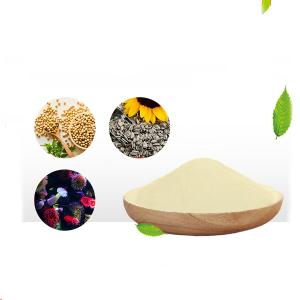





The Role of Phospholipids in Natural Products
Time:2025-08-20Phospholipids are a class of amphiphilic molecules widely found in natural products derived from plants, animals, and microorganisms. They play important structural and functional roles, contributing to membrane formation, molecular organization, and intracellular interactions. Understanding the role of phospholipids in natural products provides insights into their biological organization and potential applications in research and industry.
Structural Features
A phospholipid molecule typically consists of a hydrophilic head group and two hydrophobic fatty acid chains. This amphiphilic nature enables phospholipids to self-assemble into lipid bilayers, forming the structural basis of cell membranes and organelles. In natural products, phospholipids exhibit diversity in both head groups (e.g., choline, ethanolamine, serine, or inositol) and fatty acid chain composition, affecting their physical and chemical properties.
Distribution in Natural Sources
Plant-derived products: Soybeans, sunflower seeds, and algae contain significant amounts of phospholipids, primarily in seed oils and cellular membranes.
Animal-derived products: Liver, egg yolk, and fish are rich in phospholipids, including phosphatidylcholine and phosphatidylethanolamine.
Microbial sources: Bacteria and yeast produce phospholipids as major components of cell membranes, participating in cell structure and metabolic processes.
Functional Roles
Within natural products, phospholipids contribute to:
Structural organization: Forming lipid bilayers that provide physical integrity to cells and organelles.
Molecular assembly: Their amphiphilic properties allow formation of liposomes, micelles, or other self-assembled structures, supporting storage and transport of bioactive molecules.
Signal regulation: Phospholipids and their metabolites participate in membrane protein localization and electrostatic interactions, providing platforms for cellular signaling processes.
Research and Applications
Advances in analytical techniques, such as mass spectrometry and nuclear magnetic resonance, enable precise characterization of phospholipid types and distributions in natural products. Understanding these characteristics is valuable for fields such as food science, biotechnology, and material science, offering insights into molecular organization and potential applications in formulation or delivery systems.
Conclusion
Phospholipids in natural products serve as both structural components and functional regulators, contributing to membrane formation, molecular assembly, and intracellular organization. Studying their distribution and roles enhances our understanding of natural products and provides foundational knowledge for research and industrial applications.