

 CN
CN



The Emulsifying Role of Phospholipids in Food Systems
Time:2025-08-11Phospholipids are amphiphilic molecules commonly found in both plant and animal sources, characterized by hydrophilic (water-attracting) head groups and hydrophobic (water-repelling) fatty acid tails. This unique molecular structure enables phospholipids to act as natural emulsifiers in food products. Emulsification is critical in food science as it allows for the stable mixing of immiscible liquids, primarily oil and water, thereby improving texture, appearance, and shelf-life of food items.
Structure and Properties of Phospholipids Relevant to Emulsification
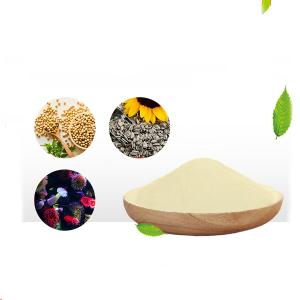
Phospholipids contain a polar phosphate-containing head and non-polar fatty acid tails. This amphipathic nature allows them to position themselves at the interface between oil and water phases, reducing interfacial tension and stabilizing dispersed droplets. Common food-grade phospholipids include phosphatidylcholine (PC), phosphatidylethanolamine (PE), and phosphatidylinositol (PI), with sources such as soy lecithin, egg yolk lecithin, and sunflower lecithin.
Mechanism of Emulsification by Phospholipids
Interface Adsorption
Phospholipid molecules migrate rapidly to the oil-water interface during emulsification, orienting their hydrophobic tails towards the oil phase and hydrophilic heads towards the aqueous phase. This adsorption lowers the interfacial tension, facilitating the formation of smaller oil droplets.
Formation of Stabilizing Interfacial Films
Once adsorbed, phospholipids organize into a cohesive monolayer or multilayer film around oil droplets. This film acts as a physical barrier to coalescence, preventing oil droplets from merging and thus stabilizing the emulsion.
Electrostatic and Steric Stabilization
Charged phospholipid head groups can impart electrostatic repulsion between droplets, while the spatial arrangement of phospholipid molecules provides steric hindrance. Both effects contribute to enhanced emulsion stability.
Interaction with Other Food Components
Phospholipids often interact with proteins, polysaccharides, and other emulsifiers present in food formulations, creating complex interfacial structures that further improve emulsion stability and texture.
Applications of Phospholipids as Emulsifiers in Foods
Dairy Products
Phospholipids aid in stabilizing fat globules in milk, cream, and ice cream, contributing to smooth texture and uniform appearance.
Baked Goods
They help in dispersing fats uniformly within doughs and batters, improving crumb structure and shelf-life.
Sauces and Dressings
Phospholipids enable the stable mixing of oils and water-based ingredients, maintaining product homogeneity and consistency.
Confectionery
They facilitate chocolate processing by controlling fat crystallization and improving flow properties.
Advantages of Phospholipids as Food Emulsifiers
Natural Origin
Derived from soy, eggs, and sunflower, phospholipids meet consumer demand for natural ingredients.
Biodegradability and Safety
Generally recognized as safe (GRAS), phospholipids are biodegradable and non-toxic.
Functional Versatility
Effective across a range of pH, temperature, and ionic strengths, they suit diverse food applications.
Conclusion
Phospholipids play a vital role in food emulsification due to their amphipathic structure, enabling them to stabilize oil-water interfaces effectively. Their natural origin, functional versatility, and compatibility with other food ingredients make them indispensable in the formulation of a wide variety of food products. Continued research and innovation in phospholipid-based emulsifiers hold promise for advancing food texture, stability, and quality.