

 CN
CN
Product Categories
--No product--





News
The Blended Application of Phospholipids and Other Emulsifiers in Food Emulsion Systems
Time:2025-11-14
1. Introduction
In modern food formulation, emulsions are key systems that determine texture, appearance, and stability. Phospholipids, as naturally derived amphiphilic molecules, play an important role in stabilizing oil–water interfaces. However, the performance of phospholipids alone may be limited by their physicochemical characteristics, such as solubility or phase behavior. Therefore, blending phospholipids with other emulsifiers has become an effective strategy to improve emulsion structure and processing adaptability in food manufacturing.
2. Role of Phospholipids in Food Emulsion Systems
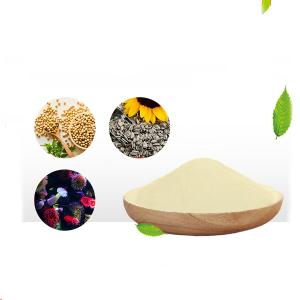
Phospholipids—commonly obtained from soybeans, egg yolk, sunflower seeds, and rapeseed—possess both hydrophilic and lipophilic groups, allowing them to align at the oil–water interface. This interfacial orientation reduces surface tension and forms a protective layer around dispersed droplets. In food systems such as dairy beverages, dressings, and nutritional emulsions, phospholipids contribute to droplet stabilization, viscosity control, and phase uniformity during storage and processing.
3. Rationale for Blending with Other Emulsifiers
Although phospholipids provide excellent biocompatibility and natural origin, they sometimes show poor dispersion or limited performance under high-shear or heat conditions. To address this, researchers and formulators blend phospholipids with other emulsifiers—such as monoglycerides, sucrose esters, polysorbates, and proteins—to achieve complementary functional effects. This combination enhances emulsification efficiency, improves emulsion texture, and increases tolerance to processing stresses like temperature and pH variation.
4. Common Blending Strategies
The blending of phospholipids with other emulsifiers can be achieved through several approaches:
Phospholipid–Protein Systems: Proteins such as casein or whey protein isolate form complex interfacial films with phospholipids, creating stable emulsions in dairy and plant-based beverages.
Phospholipid–Sugar Ester Blends: Sucrose esters improve emulsifying strength and dispersion, allowing finer droplet formation in dressings and sauces.
Phospholipid–Polysorbate Systems: Polysorbates increase emulsification speed and reduce droplet coalescence, suitable for processed foods and instant products.
Phospholipid–Monoglyceride Mixtures: Monoglycerides enhance thermal and freeze–thaw stability, often used in bakery and frozen dessert applications.
These combinations can be optimized according to product type, ingredient compatibility, and processing method.
5. Processing and Structural Considerations
In blended emulsifier systems, factors such as mixing sequence, temperature, and homogenization conditions significantly influence interfacial film formation and stability. Advanced processing methods—like high-pressure homogenization, ultrasonic emulsification, and microfluidization—enable better integration of phospholipids and auxiliary emulsifiers. Moreover, controlling the ratio between hydrophilic and lipophilic components is essential for achieving the desired droplet size distribution and emulsion rheology.
6. Industrial Applications and Formulation Development
Blended phospholipid systems are now widely applied in:
Dairy and Plant-Based Beverages: Improving dispersion of fat and protein phases.
Nutritional Emulsions and Supplements: Stabilizing oil-based nutrients in liquid matrices.
Bakery and Confectionery Products: Enhancing texture uniformity and shelf appearance.
Instant Powdered Foods: Promoting reconstitution and wettability.
Such applications demonstrate the flexibility of phospholipid-based emulsifier systems in adapting to various product categories within the food industry.
7. Future Development Trends
Future research and industrial innovation in phospholipid–emulsifier blending focus on three main directions:
Natural and Clean-Label Formulations: Replacing synthetic emulsifiers with plant-derived alternatives while maintaining stability.
Advanced Emulsion Design: Employing nanoemulsions, multilayer emulsions, and microencapsulation techniques to enhance functional stability.
Sustainable Production: Developing environmentally friendly extraction and purification processes for phospholipids and co-emulsifiers.
These trends align with the global movement toward more natural, sustainable, and technologically advanced food systems.
8. Conclusion
The blended application of phospholipids and other emulsifiers provides a versatile and effective approach to constructing stable, high-quality food emulsions. Through careful formulation design and process optimization, it is possible to harness the complementary properties of different emulsifiers, achieving balanced performance across texture, stability, and processing adaptability. As the demand for natural and functional ingredients continues to grow, phospholipid-based blended systems will play an increasingly important role in shaping the future of food emulsification technology.
In modern food formulation, emulsions are key systems that determine texture, appearance, and stability. Phospholipids, as naturally derived amphiphilic molecules, play an important role in stabilizing oil–water interfaces. However, the performance of phospholipids alone may be limited by their physicochemical characteristics, such as solubility or phase behavior. Therefore, blending phospholipids with other emulsifiers has become an effective strategy to improve emulsion structure and processing adaptability in food manufacturing.
2. Role of Phospholipids in Food Emulsion Systems
Phospholipids—commonly obtained from soybeans, egg yolk, sunflower seeds, and rapeseed—possess both hydrophilic and lipophilic groups, allowing them to align at the oil–water interface. This interfacial orientation reduces surface tension and forms a protective layer around dispersed droplets. In food systems such as dairy beverages, dressings, and nutritional emulsions, phospholipids contribute to droplet stabilization, viscosity control, and phase uniformity during storage and processing.
3. Rationale for Blending with Other Emulsifiers
Although phospholipids provide excellent biocompatibility and natural origin, they sometimes show poor dispersion or limited performance under high-shear or heat conditions. To address this, researchers and formulators blend phospholipids with other emulsifiers—such as monoglycerides, sucrose esters, polysorbates, and proteins—to achieve complementary functional effects. This combination enhances emulsification efficiency, improves emulsion texture, and increases tolerance to processing stresses like temperature and pH variation.
4. Common Blending Strategies
The blending of phospholipids with other emulsifiers can be achieved through several approaches:
Phospholipid–Protein Systems: Proteins such as casein or whey protein isolate form complex interfacial films with phospholipids, creating stable emulsions in dairy and plant-based beverages.
Phospholipid–Sugar Ester Blends: Sucrose esters improve emulsifying strength and dispersion, allowing finer droplet formation in dressings and sauces.
Phospholipid–Polysorbate Systems: Polysorbates increase emulsification speed and reduce droplet coalescence, suitable for processed foods and instant products.
Phospholipid–Monoglyceride Mixtures: Monoglycerides enhance thermal and freeze–thaw stability, often used in bakery and frozen dessert applications.
These combinations can be optimized according to product type, ingredient compatibility, and processing method.
5. Processing and Structural Considerations
In blended emulsifier systems, factors such as mixing sequence, temperature, and homogenization conditions significantly influence interfacial film formation and stability. Advanced processing methods—like high-pressure homogenization, ultrasonic emulsification, and microfluidization—enable better integration of phospholipids and auxiliary emulsifiers. Moreover, controlling the ratio between hydrophilic and lipophilic components is essential for achieving the desired droplet size distribution and emulsion rheology.
6. Industrial Applications and Formulation Development
Blended phospholipid systems are now widely applied in:
Dairy and Plant-Based Beverages: Improving dispersion of fat and protein phases.
Nutritional Emulsions and Supplements: Stabilizing oil-based nutrients in liquid matrices.
Bakery and Confectionery Products: Enhancing texture uniformity and shelf appearance.
Instant Powdered Foods: Promoting reconstitution and wettability.
Such applications demonstrate the flexibility of phospholipid-based emulsifier systems in adapting to various product categories within the food industry.
7. Future Development Trends
Future research and industrial innovation in phospholipid–emulsifier blending focus on three main directions:
Natural and Clean-Label Formulations: Replacing synthetic emulsifiers with plant-derived alternatives while maintaining stability.
Advanced Emulsion Design: Employing nanoemulsions, multilayer emulsions, and microencapsulation techniques to enhance functional stability.
Sustainable Production: Developing environmentally friendly extraction and purification processes for phospholipids and co-emulsifiers.
These trends align with the global movement toward more natural, sustainable, and technologically advanced food systems.
8. Conclusion
The blended application of phospholipids and other emulsifiers provides a versatile and effective approach to constructing stable, high-quality food emulsions. Through careful formulation design and process optimization, it is possible to harness the complementary properties of different emulsifiers, achieving balanced performance across texture, stability, and processing adaptability. As the demand for natural and functional ingredients continues to grow, phospholipid-based blended systems will play an increasingly important role in shaping the future of food emulsification technology.