

 CN
CN
Product Categories
--No product--

News
Study on the Dispersibility of Phospholipids in High-Fat Snack Emulsion Systems
Time:2025-12-04
In the production of high-fat snacks, the stability and uniformity of emulsion systems play a crucial role in determining product texture, appearance, and processing performance. Phospholipids, as natural surface-active agents, possess unique amphiphilic structures that make them effective in stabilizing emulsions. Investigating the dispersibility of phospholipids in high-fat snack systems provides valuable insights for optimizing processing techniques and product formulation.
Properties of Phospholipids
Phospholipids are composed of glycerol, fatty acids, and phosphate groups, giving them both hydrophilic and hydrophobic characteristics:
Amphiphilic Structure: Their dual affinity allows them to align at oil-water interfaces, forming protective layers around oil droplets.
Emulsification Capability: Phospholipids reduce interfacial tension, facilitating uniform dispersion of lipids within aqueous phases.
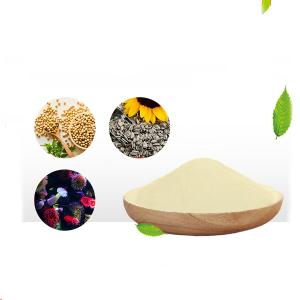
Diverse Sources: Common sources include soybean lecithin, egg yolk lecithin, and sunflower lecithin, offering flexibility in processing applications.
High-Fat Snack Emulsion Systems
High-fat snacks, such as chips, extruded puffed snacks, and nut-based products, contain significant amounts of lipids. In emulsion-based formulations, achieving uniform distribution of oil droplets is critical for:
Consistent Product Texture
Controlled Processing Behavior
Uniform Appearance and Sensory Quality
Dispersibility of Phospholipids
Research on the dispersibility of phospholipids focuses on several key aspects:
Emulsification Efficiency: Phospholipids can reduce droplet size, enhancing uniformity in the emulsion.
Interfacial Adsorption: Phospholipids adsorb at the oil-water interface, preventing droplet aggregation and coalescence.
Rheological Effects: Phospholipid concentration and oil content influence the viscosity and flow properties of the system.
Analytical Methods
Common methods for evaluating phospholipid dispersibility include:
Particle Size Analysis: Laser diffraction techniques to measure droplet distribution and uniformity.
Microscopic Observation: Light or fluorescence microscopy to visualize droplet morphology and aggregation.
Emulsion Stability Tests: Centrifugation or storage studies to assess phase separation.
Interfacial Tension Measurement: Determining the adsorption behavior of phospholipids at the oil-water interface.
Practical Implications
Studying phospholipid dispersibility aids in optimizing high-fat snack formulation and processing:
Formulation Optimization: Selecting appropriate types and concentrations of phospholipids improves oil dispersion.
Processing Control: Reducing droplet aggregation enhances system stability during manufacturing.
Product Consistency: Ensures uniform texture, appearance, and overall quality in finished products.
Conclusion
Phospholipids exhibit excellent dispersibility in high-fat snack emulsion systems due to their amphiphilic structure and surface-active properties. Systematic investigation of their dispersibility can provide a scientific basis for optimizing formulation, enhancing product stability, and improving processing performance in high-fat snack production.
Properties of Phospholipids
Phospholipids are composed of glycerol, fatty acids, and phosphate groups, giving them both hydrophilic and hydrophobic characteristics:
Amphiphilic Structure: Their dual affinity allows them to align at oil-water interfaces, forming protective layers around oil droplets.
Emulsification Capability: Phospholipids reduce interfacial tension, facilitating uniform dispersion of lipids within aqueous phases.
Diverse Sources: Common sources include soybean lecithin, egg yolk lecithin, and sunflower lecithin, offering flexibility in processing applications.
High-Fat Snack Emulsion Systems
High-fat snacks, such as chips, extruded puffed snacks, and nut-based products, contain significant amounts of lipids. In emulsion-based formulations, achieving uniform distribution of oil droplets is critical for:
Consistent Product Texture
Controlled Processing Behavior
Uniform Appearance and Sensory Quality
Dispersibility of Phospholipids
Research on the dispersibility of phospholipids focuses on several key aspects:
Emulsification Efficiency: Phospholipids can reduce droplet size, enhancing uniformity in the emulsion.
Interfacial Adsorption: Phospholipids adsorb at the oil-water interface, preventing droplet aggregation and coalescence.
Rheological Effects: Phospholipid concentration and oil content influence the viscosity and flow properties of the system.
Analytical Methods
Common methods for evaluating phospholipid dispersibility include:
Particle Size Analysis: Laser diffraction techniques to measure droplet distribution and uniformity.
Microscopic Observation: Light or fluorescence microscopy to visualize droplet morphology and aggregation.
Emulsion Stability Tests: Centrifugation or storage studies to assess phase separation.
Interfacial Tension Measurement: Determining the adsorption behavior of phospholipids at the oil-water interface.
Practical Implications
Studying phospholipid dispersibility aids in optimizing high-fat snack formulation and processing:
Formulation Optimization: Selecting appropriate types and concentrations of phospholipids improves oil dispersion.
Processing Control: Reducing droplet aggregation enhances system stability during manufacturing.
Product Consistency: Ensures uniform texture, appearance, and overall quality in finished products.
Conclusion
Phospholipids exhibit excellent dispersibility in high-fat snack emulsion systems due to their amphiphilic structure and surface-active properties. Systematic investigation of their dispersibility can provide a scientific basis for optimizing formulation, enhancing product stability, and improving processing performance in high-fat snack production.