

 CN
CN
Product Categories
--No product--



News
Phospholipids in the Optimization of Frozen Dessert Emulsion Systems
Time:2025-12-09
Frozen desserts, such as ice cream and frozen mousse, are complex emulsion-based products where fat and water phases interact with sugars, proteins, and stabilizers. The stability of these emulsions is critical for texture, mouthfeel, and overall quality. Phospholipids, as natural emulsifiers, have been widely applied to optimize frozen dessert emulsion systems by improving fat dispersion and structural stability.
Properties of Phospholipids
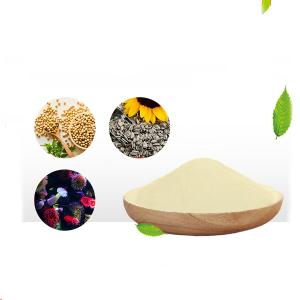
Phospholipids are amphiphilic molecules containing a hydrophilic phosphate head and hydrophobic fatty acid tails. This structure allows them to adsorb at oil-water interfaces, forming a stabilizing layer that prevents fat coalescence. Common sources include soybean lecithin and egg lecithin. Their emulsifying capacity makes them suitable for enhancing the microstructure and processing performance of frozen desserts.
Application in Frozen Dessert Emulsion Systems
In frozen dessert formulations, phospholipids contribute to emulsion stability and processing efficiency in several ways:
Stabilization of Oil-Water Emulsions: Phospholipids prevent fat aggregation during freezing and thawing, maintaining a homogeneous system.
Improvement of Emulsion Texture: By reducing droplet size and promoting uniform fat distribution, phospholipids enhance the smoothness and creaminess of frozen desserts.
Optimization of Processing Performance: Phospholipids improve the handling properties of emulsions during mixing, freezing, and storage, ensuring consistent product quality.
Research and Analysis Methods
Studies on phospholipids in frozen dessert emulsions typically involve:
Emulsion Stability Testing: Evaluating phase separation under freezing, thawing, and temperature cycling conditions.
Microscopic Analysis: Observing droplet size and distribution using optical or cryo-electron microscopy.
Physical Property Measurements: Measuring viscosity, rheology, and freezing behavior to assess the impact of phospholipids on emulsion performance.
Conclusion
Phospholipids play a key role in optimizing frozen dessert emulsion systems. Their ability to stabilize fat droplets, improve emulsion texture, and enhance processing performance makes them valuable for the production of high-quality frozen desserts. Research on phospholipid applications provides insights for formulation optimization and contributes to consistent product structure and quality.
Properties of Phospholipids
Phospholipids are amphiphilic molecules containing a hydrophilic phosphate head and hydrophobic fatty acid tails. This structure allows them to adsorb at oil-water interfaces, forming a stabilizing layer that prevents fat coalescence. Common sources include soybean lecithin and egg lecithin. Their emulsifying capacity makes them suitable for enhancing the microstructure and processing performance of frozen desserts.
Application in Frozen Dessert Emulsion Systems
In frozen dessert formulations, phospholipids contribute to emulsion stability and processing efficiency in several ways:
Stabilization of Oil-Water Emulsions: Phospholipids prevent fat aggregation during freezing and thawing, maintaining a homogeneous system.
Improvement of Emulsion Texture: By reducing droplet size and promoting uniform fat distribution, phospholipids enhance the smoothness and creaminess of frozen desserts.
Optimization of Processing Performance: Phospholipids improve the handling properties of emulsions during mixing, freezing, and storage, ensuring consistent product quality.
Research and Analysis Methods
Studies on phospholipids in frozen dessert emulsions typically involve:
Emulsion Stability Testing: Evaluating phase separation under freezing, thawing, and temperature cycling conditions.
Microscopic Analysis: Observing droplet size and distribution using optical or cryo-electron microscopy.
Physical Property Measurements: Measuring viscosity, rheology, and freezing behavior to assess the impact of phospholipids on emulsion performance.
Conclusion
Phospholipids play a key role in optimizing frozen dessert emulsion systems. Their ability to stabilize fat droplets, improve emulsion texture, and enhance processing performance makes them valuable for the production of high-quality frozen desserts. Research on phospholipid applications provides insights for formulation optimization and contributes to consistent product structure and quality.