

 CN
CN




Phospholipids in Targeted Drug Delivery
Time:2025-08-27Phospholipids are amphiphilic molecules widely found in biological membranes, characterized by a hydrophilic phosphate head and hydrophobic fatty acid tails. Their unique structural properties make them ideal candidates for constructing drug delivery systems. In the field of targeted drug delivery, phospholipids play a critical role as carriers or components of delivery vehicles, enabling precise transport of active compounds to specific tissues or cells while maintaining stability and compatibility with biological environments.
Structural Characteristics and Properties
Phospholipids are primarily composed of a glycerol backbone, two fatty acid chains, and a phosphate-containing polar head group. This dual affinity allows phospholipids to self-assemble into various structures in aqueous environments, such as micelles, bilayers, and vesicles. Such self-assembled structures form the foundation for lipid-based delivery systems, including liposomes, solid lipid nanoparticles, and nanoemulsions.
Applications in Targeted Drug Delivery
1. Liposomes
Liposomes are spherical vesicles formed by phospholipid bilayers. They can encapsulate hydrophilic compounds in the aqueous core and hydrophobic compounds within the lipid bilayer. By modifying the surface with targeting ligands such as antibodies, peptides, or polymers, phospholipid-based liposomes can achieve site-specific delivery, enhancing the localization of the encapsulated agent.
2. Solid Lipid Nanoparticles (SLNs)
Phospholipids are often used as stabilizers in SLNs, forming a protective layer around solid lipid cores. This provides enhanced dispersibility, physical stability, and compatibility with both hydrophilic and hydrophobic drugs. SLNs serve as a versatile platform for designing targeted drug delivery systems.
3. Phospholipid-Coated Nanocarriers
Beyond liposomes and SLNs, phospholipids are employed as coating agents for polymeric nanoparticles, metallic nanocarriers, or inorganic nanomaterials. The phospholipid coating improves biocompatibility, colloidal stability, and interactions with cell membranes, facilitating targeted uptake.
4. Microemulsions and Nanoemulsions
In emulsion-based systems, phospholipids act as surfactants, stabilizing oil-water interfaces and allowing the incorporation of hydrophobic compounds. These micro- or nanoemulsions are used as delivery vehicles that can be engineered for specific tissue targeting or controlled release.
Considerations in Formulation Design
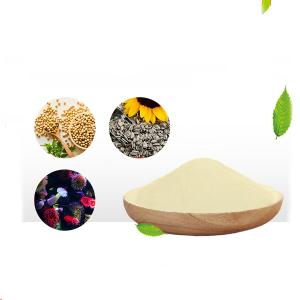
Source and Purity: Common sources include soy lecithin, egg lecithin, or synthetic phospholipids, each with distinct compositions and purity profiles.
Structural Modifications: Fatty acid chain length, degree of saturation, and head group chemistry can be tailored to influence membrane fluidity, vesicle stability, and release kinetics.
Stability: Phospholipids are sensitive to oxidation and hydrolysis, often requiring antioxidants, inert atmosphere, or low-temperature storage during formulation.
Scalability: Producing consistent phospholipid-based carriers at an industrial scale requires precise control over manufacturing processes such as extrusion, homogenization, and lyophilization.
Future Prospects
Advances in nanotechnology and materials science continue to expand the applications of phospholipids in targeted drug delivery. Integration with polymers, bioactive ligands, and stimuli-responsive materials enables the design of sophisticated delivery platforms capable of site-specific release, improved bioavailability, and enhanced compatibility with biological systems.
Conclusion
Phospholipids serve as versatile and biocompatible building blocks in targeted drug delivery systems. From liposomes to solid lipid nanoparticles and coated nanocarriers, they provide structural integrity, encapsulation capability, and functional flexibility. Their continued use and development underpin modern approaches to precision delivery of pharmaceutical compounds, highlighting their central role in the advancement of drug delivery technologies.