

 CN
CN
Product Categories
--No product--



News
Phospholipids in Oil Blending Technology
Time:2025-12-03
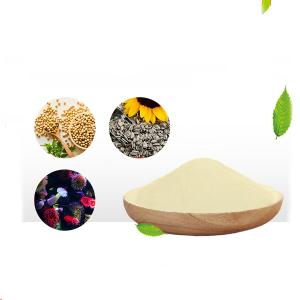
Phospholipids are amphiphilic compounds widely found in natural sources such as soy, egg yolk, and plant oils. Due to their unique molecular structure, they play an important role as emulsifiers in oil blending technology. Their ability to stabilize oil-in-water or water-in-oil systems makes them essential in producing uniform and stable blended oils.
Molecular Characteristics of Phospholipids
Phospholipid molecules consist of a hydrophilic phosphate head and hydrophobic fatty acid tails. This dual affinity enables them to adsorb at oil–water interfaces, reduce interfacial tension, and promote homogeneous dispersion of oil droplets within aqueous or oil phases.
Emulsification in Oil Blending
Interface Stabilization: Phospholipids form a protective layer around oil droplets, preventing coalescence and phase separation.
Enhanced Emulsification Efficiency: Incorporating phospholipids in oil blending improves droplet dispersion, leading to a more uniform and stable mixture.
Compatibility with Different Oils: Phospholipids are compatible with a wide range of oils, including vegetable oils, animal fats, and mixed oils, making them versatile for various blending processes.
Research and Application Trends
Industrial studies have shown that the type, concentration, and processing conditions of phospholipids significantly influence emulsification performance. Natural phospholipids such as soy lecithin and modified phospholipids display differences in emulsifying efficiency, allowing for targeted selection based on product requirements. Future trends include exploring synergistic effects with other emulsifiers and optimizing stability under high-temperature processing and long-term storage conditions.
Conclusion
Phospholipids play a critical role in oil blending technology due to their emulsifying properties. Their amphiphilic structure enables effective dispersion and stabilization of oil systems. Through proper selection and application, phospholipids enhance the uniformity and stability of blended oils, providing reliable support for industrial oil processing.
Molecular Characteristics of Phospholipids
Phospholipid molecules consist of a hydrophilic phosphate head and hydrophobic fatty acid tails. This dual affinity enables them to adsorb at oil–water interfaces, reduce interfacial tension, and promote homogeneous dispersion of oil droplets within aqueous or oil phases.
Emulsification in Oil Blending
Interface Stabilization: Phospholipids form a protective layer around oil droplets, preventing coalescence and phase separation.
Enhanced Emulsification Efficiency: Incorporating phospholipids in oil blending improves droplet dispersion, leading to a more uniform and stable mixture.
Compatibility with Different Oils: Phospholipids are compatible with a wide range of oils, including vegetable oils, animal fats, and mixed oils, making them versatile for various blending processes.
Research and Application Trends
Industrial studies have shown that the type, concentration, and processing conditions of phospholipids significantly influence emulsification performance. Natural phospholipids such as soy lecithin and modified phospholipids display differences in emulsifying efficiency, allowing for targeted selection based on product requirements. Future trends include exploring synergistic effects with other emulsifiers and optimizing stability under high-temperature processing and long-term storage conditions.
Conclusion
Phospholipids play a critical role in oil blending technology due to their emulsifying properties. Their amphiphilic structure enables effective dispersion and stabilization of oil systems. Through proper selection and application, phospholipids enhance the uniformity and stability of blended oils, providing reliable support for industrial oil processing.