

 CN
CN
Product Categories
--No product--


News
Phospholipids in Emulsion Technology for Meal-Replacement Foods
Time:2025-11-19
Meal-replacement foods are complex formulations that often include oils, proteins, carbohydrates, and other functional ingredients. Achieving a stable and uniform product requires careful control of emulsion systems, as these influence texture, dispersibility, and overall process stability. Phospholipids, due to their amphiphilic structure, play an important role in emulsion technology and are widely used as structuring and stabilizing agents in meal-replacement products.
1. Characteristics of Emulsion Systems in Meal-Replacement Foods
Meal-replacement formulations typically involve oil-in-water (O/W) emulsions, where lipophilic nutrients are dispersed within aqueous matrices. The stability of these emulsions is crucial for product handling, shelf-life, and reconstitution behavior. Emulsions must withstand mechanical mixing, thermal processing, and storage conditions without phase separation or coalescence.
2. Phospholipid Structure and Functional Role
Phospholipids possess hydrophilic head groups and hydrophobic fatty acid tails, allowing them to localize at oil–water interfaces. This property reduces interfacial tension and stabilizes dispersed oil droplets. In meal-replacement foods, phospholipids assist in:
Droplet size reduction and uniformity
Formation of protective interfacial layers
Enhanced dispersibility of lipid components
Compatibility with proteins, fibers, and carbohydrate-based stabilizers
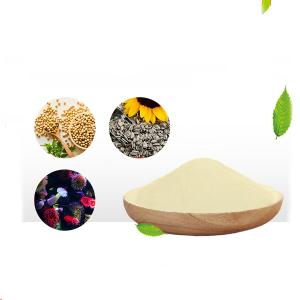
Commonly used phospholipids in this context include soybean lecithin, sunflower lecithin, and fractionated phospholipids with controlled composition.
3. Integration into Formulation Processes
Phospholipids can be incorporated at different stages of production:
Oil phase pre-dispersion: Dissolving phospholipids in the oil component helps create a more uniform primary emulsion.
High-shear mixing: Ensures even distribution of phospholipids at the interface and promotes smaller droplet sizes.
High-pressure homogenization: Further reduces droplet size and stabilizes the emulsion against coalescence.
The processing stage, mixing intensity, and temperature all influence the effectiveness of phospholipids in forming stable emulsions.
4. Interaction with Other Ingredients
Phospholipids are often used in combination with proteins, polysaccharides, and other emulsifiers. These interactions can enhance emulsion stability by reinforcing interfacial layers or providing steric and electrostatic repulsion between droplets. Formulation scientists adjust ratios and combinations to match product-specific requirements such as viscosity, mouthfeel, and reconstitution behavior.
5. Technical Considerations in Storage and Reconstitution
Stable emulsions in meal-replacement foods must maintain droplet size distribution and viscosity during storage and upon rehydration. Phospholipids contribute to this stability by:
Maintaining droplet integrity under varying temperatures
Reducing oil separation during storage
Supporting uniform dispersion during reconstitution
Optimizing phospholipid type and concentration is essential for consistent product performance.
6. Trends in Phospholipid Application
Recent research in meal-replacement formulation emphasizes:
Use of plant-based phospholipids for clean-label products
Fractionated phospholipids with defined composition for predictable emulsification
Combination with novel protein sources to enhance emulsion stability
Application in powdered and liquid meal-replacement formats
These trends demonstrate the ongoing importance of phospholipids in designing versatile and stable emulsion systems.
7. Conclusion
Phospholipids serve as critical emulsifying agents in meal-replacement foods, supporting droplet dispersion, interfacial stability, and overall processing consistency. Their amphiphilic nature and compatibility with multiple food components make them indispensable tools in modern formulation and emulsion technology.
1. Characteristics of Emulsion Systems in Meal-Replacement Foods
Meal-replacement formulations typically involve oil-in-water (O/W) emulsions, where lipophilic nutrients are dispersed within aqueous matrices. The stability of these emulsions is crucial for product handling, shelf-life, and reconstitution behavior. Emulsions must withstand mechanical mixing, thermal processing, and storage conditions without phase separation or coalescence.
2. Phospholipid Structure and Functional Role
Phospholipids possess hydrophilic head groups and hydrophobic fatty acid tails, allowing them to localize at oil–water interfaces. This property reduces interfacial tension and stabilizes dispersed oil droplets. In meal-replacement foods, phospholipids assist in:
Droplet size reduction and uniformity
Formation of protective interfacial layers
Enhanced dispersibility of lipid components
Compatibility with proteins, fibers, and carbohydrate-based stabilizers
Commonly used phospholipids in this context include soybean lecithin, sunflower lecithin, and fractionated phospholipids with controlled composition.
3. Integration into Formulation Processes
Phospholipids can be incorporated at different stages of production:
Oil phase pre-dispersion: Dissolving phospholipids in the oil component helps create a more uniform primary emulsion.
High-shear mixing: Ensures even distribution of phospholipids at the interface and promotes smaller droplet sizes.
High-pressure homogenization: Further reduces droplet size and stabilizes the emulsion against coalescence.
The processing stage, mixing intensity, and temperature all influence the effectiveness of phospholipids in forming stable emulsions.
4. Interaction with Other Ingredients
Phospholipids are often used in combination with proteins, polysaccharides, and other emulsifiers. These interactions can enhance emulsion stability by reinforcing interfacial layers or providing steric and electrostatic repulsion between droplets. Formulation scientists adjust ratios and combinations to match product-specific requirements such as viscosity, mouthfeel, and reconstitution behavior.
5. Technical Considerations in Storage and Reconstitution
Stable emulsions in meal-replacement foods must maintain droplet size distribution and viscosity during storage and upon rehydration. Phospholipids contribute to this stability by:
Maintaining droplet integrity under varying temperatures
Reducing oil separation during storage
Supporting uniform dispersion during reconstitution
Optimizing phospholipid type and concentration is essential for consistent product performance.
6. Trends in Phospholipid Application
Recent research in meal-replacement formulation emphasizes:
Use of plant-based phospholipids for clean-label products
Fractionated phospholipids with defined composition for predictable emulsification
Combination with novel protein sources to enhance emulsion stability
Application in powdered and liquid meal-replacement formats
These trends demonstrate the ongoing importance of phospholipids in designing versatile and stable emulsion systems.
7. Conclusion
Phospholipids serve as critical emulsifying agents in meal-replacement foods, supporting droplet dispersion, interfacial stability, and overall processing consistency. Their amphiphilic nature and compatibility with multiple food components make them indispensable tools in modern formulation and emulsion technology.