

 CN
CN





Phospholipids in Dairy Products
Time:2025-09-11Phospholipids are essential lipid molecules found naturally in animal and plant tissues. They possess both hydrophilic and hydrophobic properties, making them important for emulsification and dispersion in food systems. In the dairy industry, phospholipids are increasingly used due to their functional characteristics in product formulation and processing.
Sources of Phospholipids in Dairy
In dairy products, phospholipids are primarily derived from:
Milk fat globule membrane (MFGM), which naturally surrounds fat droplets in milk.
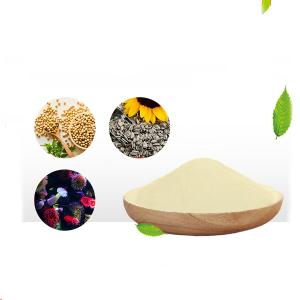
Supplemental sources such as soy lecithin or egg yolk phospholipids, which can be added to enhance emulsification or stability.
Roles in Dairy Processing
Emulsification and Dispersion
Phospholipids stabilize fat-in-water emulsions by reducing surface tension, allowing fats to be uniformly distributed throughout milk, cream, or other dairy matrices.
Improving Processing Performance
Adding phospholipids can improve mixing uniformity and reduce phase separation in yogurt, flavored milk, or other beverages during processing.
Influencing Texture and Mouthfeel
In products such as ice cream or cheese, phospholipids help improve smoothness and creaminess by stabilizing fat droplets and creating uniform dispersion.
Enhancing Stability
During thermal treatments like pasteurization or spray drying for milk powders, phospholipids help maintain product stability and prevent fat aggregation or oxidation.
Examples of Applications
Yogurt and Fermented Milk: Improves gel structure and textural consistency.
Infant and Adult Milk Powder: Enhances uniform distribution of fats in the formula.
Ice Cream: Stabilizes air bubbles and prevents fat coalescence during freezing.
Cheese: Promotes uniform fat distribution and smooth texture.
Conclusion
Phospholipids play a versatile role in dairy product formulation and processing. Their ability to stabilize emulsions, improve texture, and enhance processing performance makes them valuable ingredients in modern dairy applications.