

 CN
CN

Phospholipids and Their Interaction with Fat-Soluble Vitamins
Time:2025-08-27Phospholipids are amphiphilic molecules commonly found in biological membranes, characterized by a hydrophilic phosphate head and hydrophobic fatty acid tails. Their unique structural properties allow them to interact effectively with lipophilic compounds. Fat-soluble vitamins, including vitamins A, D, E, and K, possess long hydrophobic chains or ring structures, making them poorly soluble in aqueous environments. The interaction between phospholipids and fat-soluble vitamins has become a key consideration in the formulation of functional foods, dietary supplements, and pharmaceutical products.
Structural Basis of Interaction
The amphiphilic nature of phospholipids enables the formation of self-assembled structures such as micelles, liposomes, and emulsions. Fat-soluble vitamins can be incorporated within the hydrophobic region of phospholipid bilayers or micelles. This interaction is primarily driven by hydrophobic forces, van der Waals interactions, and, in some cases, hydrogen bonding between the polar head groups of phospholipids and the vitamin molecules.
Methods of Combination
1. Liposomal Encapsulation
Phospholipids can self-assemble into liposomes, forming bilayer vesicles with an aqueous core. Fat-soluble vitamins can be embedded within the lipid bilayer, allowing uniform dispersion and stabilization within aqueous formulations.
2. Phospholipid–Vitamin Complexes
Through direct molecular interactions, fat-soluble vitamins can form non-covalent complexes with phospholipids. This type of combination can be used in powdered or granular formulations for enhanced handling and stability.
3. Microemulsions and Nanoemulsions
Phospholipids serve as natural emulsifiers in microemulsion or nanoemulsion systems, stabilizing the oil-water interface and enabling uniform dispersion of fat-soluble vitamins in aqueous solutions.
4. Solid Dosage Forms
In capsule or tablet formulations, phospholipids can act as carriers or excipients that incorporate fat-soluble vitamins, improving their dispersion in the matrix and compatibility with other excipients.
Applications
Functional Foods: Incorporation of phospholipid–vitamin complexes in dairy products, beverages, and snack bars.
Dietary Supplements: Use in softgel capsules, powders, and chewable formulations to improve uniformity and handling.
Pharmaceutical Formulations: Liposomal or emulsified vitamin preparations that rely on phospholipids for structural support and dispersion.
Formulation Considerations
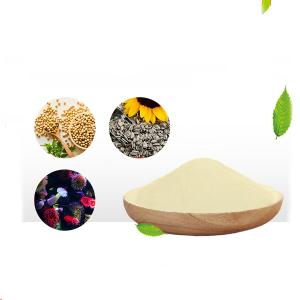
Source and Purity of Phospholipids: Common sources include soy lecithin, egg lecithin, or synthetic phospholipids, each with unique fatty acid profiles.
Stability: Fat-soluble vitamins are sensitive to light, heat, and oxidation; phospholipid encapsulation can improve stability but may require antioxidants or controlled storage conditions.
Processing Parameters: Temperature, solvent choice, and pH must be carefully controlled to prevent degradation of vitamins and phospholipids.
Conclusion
The combination of phospholipids with fat-soluble vitamins leverages the amphiphilic properties of phospholipids to improve the dispersion, stability, and handling of hydrophobic vitamins. From liposomal encapsulation to microemulsion systems and solid formulations, phospholipids serve as versatile carriers that enhance the structural and functional potential of fat-soluble vitamins in food, supplement, and pharmaceutical applications.