

 CN
CN
Product Categories
--No product--



News
Exploring the Application of Food-Grade Phospholipids in Composite Emulsifiers
Time:2025-11-21
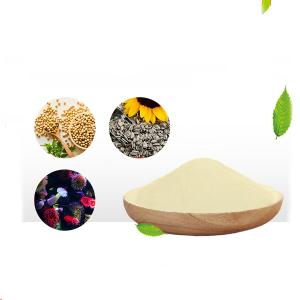
Food-grade phospholipids are naturally derived amphiphilic molecules commonly sourced from soybeans, sunflower seeds, eggs, and other lipid-rich raw materials. Because of their structural characteristics—featuring both hydrophilic phosphate groups and hydrophobic fatty acid chains—they are frequently considered in formulations that require stable interfaces between aqueous and lipid phases. In recent years, research has increasingly focused on integrating phospholipids into composite emulsifier systems to expand formulation flexibility and improve processing adaptability in modern food manufacturing.
1. Structural Basis for Use in Composite Systems
Phospholipids possess molecular arrangements similar to biological membranes, allowing them to organize into micelles, bilayers, vesicles, or mixed aggregates under different environmental conditions. When combined with other emulsifiers such as monoglycerides, sucrose esters, or protein-based emulsifiers, their structural compatibility supports the design of multi-component systems tailored to different processing environments.
2. Raw Material Sources and Processing Considerations
The composition of phospholipids—such as varying proportions of phosphatidylcholine, phosphatidylethanolamine, phosphatidylinositol, and their associated fatty acid chains—differs according to extraction source and refining methods. Refining processes may include:
Degumming
Fractionation
Deoiling or enrichment
Hydrolysis or enzymatic modification
These steps can influence purity, particle size, dispersion characteristics, and mixing behavior within composite emulsifiers.
3. Compatibility With Other Emulsification Components
Composite emulsifier systems typically aim to optimize interactions among multiple surface-active components. Research explores how phospholipids participate in:
Oil-water interfacial arrangement alongside small-molecule emulsifiers
Interactions with carbohydrate-based stabilizers
Layered interface formation in multi-phase dispersion systems
Such combinations allow formulators to adjust system stability, mouthfeel, or processing behavior through ingredient synergy rather than relying on a single emulsifying agent.
4. Applications Across Different Food Systems
Food-grade phospholipids are used across diverse product types where lipid–water interfaces must remain controlled during production, storage, or heat processing. Examples of relevant research and industrial applications include:
Beverages containing dispersed oil phases
Fat-filled powder systems
Bakery products incorporating lipid suspensions
Nutritional products and encapsulated lipid materials
The composite approach supports formulation flexibility across multiple product categories.
5. Research Directions and Technical Challenges
Current research continues to investigate several developmental questions, including:
Standardized characterization of interfacial behavior in multi-emulsifier systems
Effects of fatty acid composition on ingredient compatibility
Interaction models under thermal processing and homogenization conditions
Structural evaluation using spectroscopy, microscopy, and rheology methods
Advances in analytical tools may contribute to more detailed understanding of phospholipid behavior in composite emulsifiers.
Conclusion
Food-grade phospholipids serve as versatile components in composite emulsifier formulations due to their amphiphilic molecular structure, diverse raw material sources, and compatibility with a wide range of formulation partners. Continued technical exploration aims to refine their role in complex food systems and deepen understanding of structural interactions at the molecular and interfacial levels.
1. Structural Basis for Use in Composite Systems
Phospholipids possess molecular arrangements similar to biological membranes, allowing them to organize into micelles, bilayers, vesicles, or mixed aggregates under different environmental conditions. When combined with other emulsifiers such as monoglycerides, sucrose esters, or protein-based emulsifiers, their structural compatibility supports the design of multi-component systems tailored to different processing environments.
2. Raw Material Sources and Processing Considerations
The composition of phospholipids—such as varying proportions of phosphatidylcholine, phosphatidylethanolamine, phosphatidylinositol, and their associated fatty acid chains—differs according to extraction source and refining methods. Refining processes may include:
Degumming
Fractionation
Deoiling or enrichment
Hydrolysis or enzymatic modification
These steps can influence purity, particle size, dispersion characteristics, and mixing behavior within composite emulsifiers.
3. Compatibility With Other Emulsification Components
Composite emulsifier systems typically aim to optimize interactions among multiple surface-active components. Research explores how phospholipids participate in:
Oil-water interfacial arrangement alongside small-molecule emulsifiers
Interactions with carbohydrate-based stabilizers
Layered interface formation in multi-phase dispersion systems
Such combinations allow formulators to adjust system stability, mouthfeel, or processing behavior through ingredient synergy rather than relying on a single emulsifying agent.
4. Applications Across Different Food Systems
Food-grade phospholipids are used across diverse product types where lipid–water interfaces must remain controlled during production, storage, or heat processing. Examples of relevant research and industrial applications include:
Beverages containing dispersed oil phases
Fat-filled powder systems
Bakery products incorporating lipid suspensions
Nutritional products and encapsulated lipid materials
The composite approach supports formulation flexibility across multiple product categories.
5. Research Directions and Technical Challenges
Current research continues to investigate several developmental questions, including:
Standardized characterization of interfacial behavior in multi-emulsifier systems
Effects of fatty acid composition on ingredient compatibility
Interaction models under thermal processing and homogenization conditions
Structural evaluation using spectroscopy, microscopy, and rheology methods
Advances in analytical tools may contribute to more detailed understanding of phospholipid behavior in composite emulsifiers.
Conclusion
Food-grade phospholipids serve as versatile components in composite emulsifier formulations due to their amphiphilic molecular structure, diverse raw material sources, and compatibility with a wide range of formulation partners. Continued technical exploration aims to refine their role in complex food systems and deepen understanding of structural interactions at the molecular and interfacial levels.