

 CN
CN
Product Categories
--No product--



News
Exploration of Phospholipids in the Development of Meal Replacement and Nutritionally Fortified Foods
Time:2025-11-13
1. Introduction
With the rising demand for convenient and nutritionally balanced diets, meal replacement and nutritionally fortified foods have become significant areas of food innovation. In product formulation, phospholipids—natural amphiphilic compounds—are increasingly used due to their emulsification, dispersion, and stabilization properties. Their inclusion in these products supports uniform ingredient distribution and enhances processing adaptability.
2. Composition and Characteristics of Phospholipids
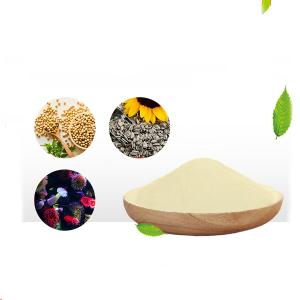
Phospholipids are composed of a glycerol backbone, fatty acid chains, phosphate groups, and polar head groups. Common food-grade phospholipids include soybean lecithin, sunflower lecithin, and egg yolk lecithin. The amphiphilic nature of phospholipids allows them to position themselves at oil–water interfaces, forming stable molecular films. This structural feature provides excellent dispersion and compatibility within complex food matrices.
3. Applications in Meal Replacement Foods
Meal replacement products are available in powdered, liquid, or bar forms, containing proteins, fats, carbohydrates, and dietary fibers. Phospholipids in these formulations facilitate the stabilization of oil–water systems, ensuring consistent texture and uniform mixing of diverse components. In liquid meal replacements or protein shakes, phospholipids help maintain homogeneity during processing and storage, supporting smooth flow properties and uniform dispersion of ingredients.
4. Applications in Nutritionally Fortified Foods
Nutritionally fortified foods often incorporate vitamins, minerals, peptides, or plant extracts. Phospholipids act as dispersing agents or carriers, enabling even distribution of these components throughout the product. By interacting with emulsified fats, proteins, or polysaccharides, phospholipids can help maintain stable suspension systems, supporting formulation consistency and processing efficiency in powdered, liquid, or semi-solid fortified products.
5. Processing Considerations and Formulation Design
The performance of phospholipids in meal replacement and fortified foods depends on factors such as concentration, temperature, shear conditions, and system pH. Common incorporation techniques include pre-emulsification, co-solubilization with the oil phase, or blending with powdered ingredients. Optimizing these parameters ensures uniform emulsification and dispersion, contributing to product quality and manufacturability.
6. Research Trends and Future Prospects
Advances in extraction and refinement have improved the purity and functionality of food-grade phospholipids. Future developments may include tailored phospholipid blends for plant-based or high-protein formulations, as well as combinations with polysaccharides or proteins to enhance system stability. Innovations such as microencapsulation and high-shear processing further expand the application potential of phospholipids in next-generation meal replacements and fortified foods.
7. Conclusion
Phospholipids play a versatile role in the development of meal replacement and nutritionally fortified foods, supporting ingredient dispersion, emulsification, and system stability. Through careful formulation and processing control, their inclusion enhances the structural consistency and manufacturing feasibility of modern nutrition-focused products, making them a valuable tool in contemporary food product development.
With the rising demand for convenient and nutritionally balanced diets, meal replacement and nutritionally fortified foods have become significant areas of food innovation. In product formulation, phospholipids—natural amphiphilic compounds—are increasingly used due to their emulsification, dispersion, and stabilization properties. Their inclusion in these products supports uniform ingredient distribution and enhances processing adaptability.
2. Composition and Characteristics of Phospholipids
Phospholipids are composed of a glycerol backbone, fatty acid chains, phosphate groups, and polar head groups. Common food-grade phospholipids include soybean lecithin, sunflower lecithin, and egg yolk lecithin. The amphiphilic nature of phospholipids allows them to position themselves at oil–water interfaces, forming stable molecular films. This structural feature provides excellent dispersion and compatibility within complex food matrices.
3. Applications in Meal Replacement Foods
Meal replacement products are available in powdered, liquid, or bar forms, containing proteins, fats, carbohydrates, and dietary fibers. Phospholipids in these formulations facilitate the stabilization of oil–water systems, ensuring consistent texture and uniform mixing of diverse components. In liquid meal replacements or protein shakes, phospholipids help maintain homogeneity during processing and storage, supporting smooth flow properties and uniform dispersion of ingredients.
4. Applications in Nutritionally Fortified Foods
Nutritionally fortified foods often incorporate vitamins, minerals, peptides, or plant extracts. Phospholipids act as dispersing agents or carriers, enabling even distribution of these components throughout the product. By interacting with emulsified fats, proteins, or polysaccharides, phospholipids can help maintain stable suspension systems, supporting formulation consistency and processing efficiency in powdered, liquid, or semi-solid fortified products.
5. Processing Considerations and Formulation Design
The performance of phospholipids in meal replacement and fortified foods depends on factors such as concentration, temperature, shear conditions, and system pH. Common incorporation techniques include pre-emulsification, co-solubilization with the oil phase, or blending with powdered ingredients. Optimizing these parameters ensures uniform emulsification and dispersion, contributing to product quality and manufacturability.
6. Research Trends and Future Prospects
Advances in extraction and refinement have improved the purity and functionality of food-grade phospholipids. Future developments may include tailored phospholipid blends for plant-based or high-protein formulations, as well as combinations with polysaccharides or proteins to enhance system stability. Innovations such as microencapsulation and high-shear processing further expand the application potential of phospholipids in next-generation meal replacements and fortified foods.
7. Conclusion
Phospholipids play a versatile role in the development of meal replacement and nutritionally fortified foods, supporting ingredient dispersion, emulsification, and system stability. Through careful formulation and processing control, their inclusion enhances the structural consistency and manufacturing feasibility of modern nutrition-focused products, making them a valuable tool in contemporary food product development.