

 CN
CN
Product Categories
--No product--





News
Exploration of Phospholipids from Different Sources in the Food Industry
Time:2025-11-03
1. Introduction
Phospholipids are amphiphilic molecules naturally present in plant, animal, and microbial systems. In the food industry, they are valued for their emulsifying, dispersing, and surface-active properties, which contribute to product texture, stability, and process efficiency. Phospholipids derived from different sources exhibit variations in composition and physicochemical properties, leading to diverse applications in food formulation and processing.
2. Major Sources of Phospholipids
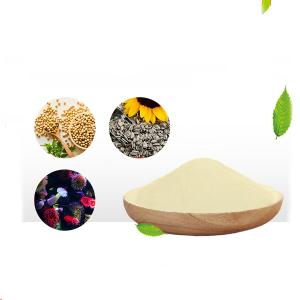
Common food industry phospholipids are derived from:
Soybean: Cost-effective with stable supply and good emulsification properties, widely used in bakery products, beverages, and chocolate processing.
Egg yolk: Rich in phosphatidylcholine, providing strong dispersing ability, commonly applied in sauces and emulsified products.
Sunflower seeds: Low allergenicity and high purity, suitable for specialized formulations requiring clean-label ingredients.
Marine sources: Extracted from fish or krill, with unique fatty acid profiles, often used in specialty food formulations or research on advanced emulsions.
3. Physicochemical Characteristics of Source-Specific Phospholipids
Phospholipids differ in fatty acid composition, head group polarity, and purity depending on their source. These differences influence melting point, solubility, emulsifying capacity, and interfacial behavior. For instance, soybean phospholipids are rich in unsaturated fatty acids and are suited for low-temperature emulsions, whereas egg yolk phospholipids with higher saturated content exhibit enhanced thermal stability.
4. Applications in Food Processing
Phospholipids are applied across multiple food systems:
Emulsions: Improve homogeneity and stability in beverages, dairy products, and sauces.
Bakery products: Optimize dough rheology, texture, and product consistency.
Chocolate and confectionery: Reduce fat agglomeration, enhance flow, and improve mouthfeel.
Powdered products: Function as wetting agents and anti-caking agents, improving dispersibility and shelf stability.
5. Technological Trends and Research Directions
Current research focuses on improving extraction and purification techniques, such as enzymatic modification, membrane separation, and supercritical fluid extraction. Hybrid phospholipid systems and modified phospholipids are being explored to enhance emulsion performance and functional versatility in advanced food formulations.
6. Conclusion
Phospholipids from different sources offer diverse structural and functional properties, providing the food industry with flexible solutions for formulation design and processing optimization. Systematic study of their characteristics and industrial application potential supports innovation in food product development and processing technologies.
Phospholipids are amphiphilic molecules naturally present in plant, animal, and microbial systems. In the food industry, they are valued for their emulsifying, dispersing, and surface-active properties, which contribute to product texture, stability, and process efficiency. Phospholipids derived from different sources exhibit variations in composition and physicochemical properties, leading to diverse applications in food formulation and processing.
2. Major Sources of Phospholipids
Common food industry phospholipids are derived from:
Soybean: Cost-effective with stable supply and good emulsification properties, widely used in bakery products, beverages, and chocolate processing.
Egg yolk: Rich in phosphatidylcholine, providing strong dispersing ability, commonly applied in sauces and emulsified products.
Sunflower seeds: Low allergenicity and high purity, suitable for specialized formulations requiring clean-label ingredients.
Marine sources: Extracted from fish or krill, with unique fatty acid profiles, often used in specialty food formulations or research on advanced emulsions.
3. Physicochemical Characteristics of Source-Specific Phospholipids
Phospholipids differ in fatty acid composition, head group polarity, and purity depending on their source. These differences influence melting point, solubility, emulsifying capacity, and interfacial behavior. For instance, soybean phospholipids are rich in unsaturated fatty acids and are suited for low-temperature emulsions, whereas egg yolk phospholipids with higher saturated content exhibit enhanced thermal stability.
4. Applications in Food Processing
Phospholipids are applied across multiple food systems:
Emulsions: Improve homogeneity and stability in beverages, dairy products, and sauces.
Bakery products: Optimize dough rheology, texture, and product consistency.
Chocolate and confectionery: Reduce fat agglomeration, enhance flow, and improve mouthfeel.
Powdered products: Function as wetting agents and anti-caking agents, improving dispersibility and shelf stability.
5. Technological Trends and Research Directions
Current research focuses on improving extraction and purification techniques, such as enzymatic modification, membrane separation, and supercritical fluid extraction. Hybrid phospholipid systems and modified phospholipids are being explored to enhance emulsion performance and functional versatility in advanced food formulations.
6. Conclusion
Phospholipids from different sources offer diverse structural and functional properties, providing the food industry with flexible solutions for formulation design and processing optimization. Systematic study of their characteristics and industrial application potential supports innovation in food product development and processing technologies.