

 CN
CN
Product Categories
--No product--

News
Emulsification Research of Phospholipids in Biscuits and Bakery Products
Time:2025-11-27
Phospholipids are widely used as versatile surface-active ingredients in modern bakery formulations. Their amphiphilic molecular structure enables them to interact with both aqueous and lipid phases, making them suitable for building stable emulsification systems in biscuits, breads, cakes, and other baked goods. Research on phospholipids in bakery processing focuses mainly on their dispersion behavior, interfacial properties, and their influence on dough handling and product structure.
1. Characteristics of Phospholipids Relevant to Bakery Applications
Phospholipids possess hydrophilic head groups and hydrophobic fatty acid chains, allowing them to assemble at oil–water interfaces. In bakery matrices—where water, fat, proteins, and starch coexist—phospholipids can align at the boundaries between phases, facilitating more uniform distribution of lipids. This contributes to consistent dough rheology, improved batter mixing, and controlled expansion during baking.
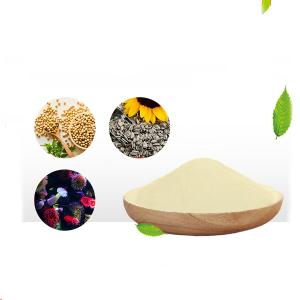
Common phospholipid sources used in bakery research include soybean lecithin and sunflower lecithin, available in both liquid and powdered forms. Their composition, degree of hydrolysis, and purity influence their emulsification behavior and process adaptability.
2. Dispersion and Pre-processing Techniques
Effective use of phospholipids requires appropriate dispersion methods. In biscuit and bakery formulations, typical steps include:
Hydration: Allowing phospholipids to absorb water to improve their dispersibility in dough systems.
Pre-melting or heating: Mild heating (usually 40–60 °C) can reduce viscosity and ease incorporation into fat blends.
Integration into oil phases: Phospholipids are often mixed with shortening or liquid oils to create a uniform emulsified fat phase before mixing with dry ingredients.
These steps help establish a stable initial emulsification structure that can withstand mechanical mixing and thermal conditions during processing.
3. Emulsification Behavior in Dough and Batter Systems
In biscuits and baked goods, phospholipids interact with multiple components:
Starch granules in dough systems
Gluten or protein structures in bakery matrices
Fat crystal networks in shortening systems
Research indicates that the presence of phospholipids can influence the distribution of fat droplets in dough, promoting more homogeneous mixing. Their interfacial orientation enhances the stability of fat–water dispersion during kneading, sheeting, or whipping, supporting consistent dough texture and batter aeration.
4. Processing Parameters Affecting Emulsification
The efficiency of phospholipid-based emulsification in bakery products is closely related to processing conditions, including:
Mixing intensity and time: Determines dispersion and interaction with the continuous dough or batter phase.
Fat phase temperature: Influences phospholipid mobility during mixing.
Water addition sequence: Affects hydration and the formation of emulsified structures.
Baking temperature profile: Impacts phase transitions and final product structure.
Optimizing these parameters ensures that phospholipids perform effectively within the complex environment of bakery formulations.
5. Compatibility With Other Bakery Ingredients
Phospholipids can be combined with emulsifiers such as mono- and diglycerides, polyglycerol esters, or functional proteins. Synergistic effects are often observed depending on the ratio and type of emulsifiers used.
Additionally, phospholipids may influence the behavior of sugar, flour components, and water-binding materials. Understanding these interactions is essential for designing stable bakery emulsification systems.
6. Application Directions in Biscuits and Bakery Products
Phospholipid-based emulsification systems are studied in various bakery categories:
Cookies and biscuits requiring uniform fat distribution
Cakes and muffins where batter aeration and oil dispersion are critical
Bread and rolls that benefit from improved dough handling and structural uniformity
Pastries and laminated products where fat layering demands consistent emulsified phases
Different product types require tailored use of phospholipids depending on moisture content, mixing method, and desired final texture.
1. Characteristics of Phospholipids Relevant to Bakery Applications
Phospholipids possess hydrophilic head groups and hydrophobic fatty acid chains, allowing them to assemble at oil–water interfaces. In bakery matrices—where water, fat, proteins, and starch coexist—phospholipids can align at the boundaries between phases, facilitating more uniform distribution of lipids. This contributes to consistent dough rheology, improved batter mixing, and controlled expansion during baking.
Common phospholipid sources used in bakery research include soybean lecithin and sunflower lecithin, available in both liquid and powdered forms. Their composition, degree of hydrolysis, and purity influence their emulsification behavior and process adaptability.
2. Dispersion and Pre-processing Techniques
Effective use of phospholipids requires appropriate dispersion methods. In biscuit and bakery formulations, typical steps include:
Hydration: Allowing phospholipids to absorb water to improve their dispersibility in dough systems.
Pre-melting or heating: Mild heating (usually 40–60 °C) can reduce viscosity and ease incorporation into fat blends.
Integration into oil phases: Phospholipids are often mixed with shortening or liquid oils to create a uniform emulsified fat phase before mixing with dry ingredients.
These steps help establish a stable initial emulsification structure that can withstand mechanical mixing and thermal conditions during processing.
3. Emulsification Behavior in Dough and Batter Systems
In biscuits and baked goods, phospholipids interact with multiple components:
Starch granules in dough systems
Gluten or protein structures in bakery matrices
Fat crystal networks in shortening systems
Research indicates that the presence of phospholipids can influence the distribution of fat droplets in dough, promoting more homogeneous mixing. Their interfacial orientation enhances the stability of fat–water dispersion during kneading, sheeting, or whipping, supporting consistent dough texture and batter aeration.
4. Processing Parameters Affecting Emulsification
The efficiency of phospholipid-based emulsification in bakery products is closely related to processing conditions, including:
Mixing intensity and time: Determines dispersion and interaction with the continuous dough or batter phase.
Fat phase temperature: Influences phospholipid mobility during mixing.
Water addition sequence: Affects hydration and the formation of emulsified structures.
Baking temperature profile: Impacts phase transitions and final product structure.
Optimizing these parameters ensures that phospholipids perform effectively within the complex environment of bakery formulations.
5. Compatibility With Other Bakery Ingredients
Phospholipids can be combined with emulsifiers such as mono- and diglycerides, polyglycerol esters, or functional proteins. Synergistic effects are often observed depending on the ratio and type of emulsifiers used.
Additionally, phospholipids may influence the behavior of sugar, flour components, and water-binding materials. Understanding these interactions is essential for designing stable bakery emulsification systems.
6. Application Directions in Biscuits and Bakery Products
Phospholipid-based emulsification systems are studied in various bakery categories:
Cookies and biscuits requiring uniform fat distribution
Cakes and muffins where batter aeration and oil dispersion are critical
Bread and rolls that benefit from improved dough handling and structural uniformity
Pastries and laminated products where fat layering demands consistent emulsified phases
Different product types require tailored use of phospholipids depending on moisture content, mixing method, and desired final texture.