

 CN
CN
Product Categories
--No product--




News
Application Trends of Phospholipids in Food Emulsifiers and Water-Retaining Agents
Time:2025-11-06
1. Introduction
Phospholipids are amphiphilic molecules composed of glycerol, fatty acids, phosphate groups, and nitrogen-containing bases. Widely found in animal and plant tissues, they are natural surface-active substances with both hydrophilic and lipophilic characteristics. Owing to these structural properties, phospholipids play an important role in food processing, particularly as emulsifiers and water-retaining agents. In recent years, as the food industry moves toward cleaner labels and natural ingredients, the use of phospholipids in these functions has shown a clear upward trend.
2. Phospholipids as Natural Emulsifiers
Phospholipids can form stable films at the oil–water interface, thereby promoting uniform dispersion and improving the physical stability of emulsified systems.
Their applications as emulsifiers in food formulations are expanding in several directions:
Plant-Based and Dairy-Alternative Beverages: Used to maintain the uniformity and long-term stability of protein–lipid systems.
Sauces and Dressings: Enhance phase stability and improve texture in mayonnaise, salad dressings, and seasoning emulsions.
Bakery and Confectionery Products: Aid in dispersing fats evenly and optimizing texture during mixing and processing.
Phospholipids are increasingly preferred for their natural origin and structural similarity to biological membranes, which supports their use in health-oriented and sustainable formulations.
3. Phospholipids in Water-Retaining Systems
In addition to emulsification, phospholipids contribute to water retention by interacting with proteins and polysaccharides to form composite networks that stabilize moisture distribution within food matrices.
Their water-retaining functions are observed in:
Meat and Plant-Based Products: Improve water-holding structure and texture stability during storage and heating.
Frozen Foods: Help maintain uniform water distribution and product integrity after thawing.
Bakery Products: Support better dough hydration and uniform crumb structure during baking and cooling.
4. Technological Advancements and Research Directions
The development of phospholipid-based emulsifiers and water-retaining systems focuses on improving performance and sustainability. Current research emphasizes:
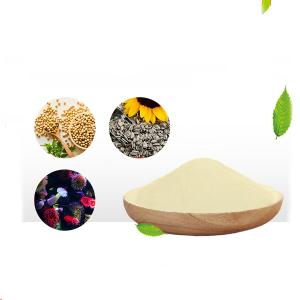
Plant-Derived Phospholipid Extraction: Developing eco-friendly extraction methods from soybeans, sunflower seeds, and rapeseeds.
Composite Formulations: Combining phospholipids with proteins, hydrocolloids, or esters to achieve synergistic emulsifying and water-binding effects.
Nano- and Microstructural Design: Applying encapsulation and nanostructure control to enhance distribution and stability within complex food systems.
5. Industry and Market Trends
As consumers increasingly demand natural, clean-label, and minimally processed foods, phospholipids are gaining traction as multifunctional ingredients. Food manufacturers are exploring their use in high-end products such as plant-based alternatives, functional beverages, and low-additive processed foods. Meanwhile, advances in purification and formulation technologies are driving broader commercial applications.
6. Conclusion
Phospholipids play a crucial role in modern food systems as natural emulsifiers and water-retaining agents. Their dual amphiphilic nature, compatibility with biological ingredients, and adaptability to diverse processing conditions make them key to next-generation food formulations. With ongoing innovation in extraction, modification, and formulation design, phospholipids are expected to continue shaping the future of clean, stable, and sustainable food products.
Phospholipids are amphiphilic molecules composed of glycerol, fatty acids, phosphate groups, and nitrogen-containing bases. Widely found in animal and plant tissues, they are natural surface-active substances with both hydrophilic and lipophilic characteristics. Owing to these structural properties, phospholipids play an important role in food processing, particularly as emulsifiers and water-retaining agents. In recent years, as the food industry moves toward cleaner labels and natural ingredients, the use of phospholipids in these functions has shown a clear upward trend.
2. Phospholipids as Natural Emulsifiers
Phospholipids can form stable films at the oil–water interface, thereby promoting uniform dispersion and improving the physical stability of emulsified systems.
Their applications as emulsifiers in food formulations are expanding in several directions:
Plant-Based and Dairy-Alternative Beverages: Used to maintain the uniformity and long-term stability of protein–lipid systems.
Sauces and Dressings: Enhance phase stability and improve texture in mayonnaise, salad dressings, and seasoning emulsions.
Bakery and Confectionery Products: Aid in dispersing fats evenly and optimizing texture during mixing and processing.
Phospholipids are increasingly preferred for their natural origin and structural similarity to biological membranes, which supports their use in health-oriented and sustainable formulations.
3. Phospholipids in Water-Retaining Systems
In addition to emulsification, phospholipids contribute to water retention by interacting with proteins and polysaccharides to form composite networks that stabilize moisture distribution within food matrices.
Their water-retaining functions are observed in:
Meat and Plant-Based Products: Improve water-holding structure and texture stability during storage and heating.
Frozen Foods: Help maintain uniform water distribution and product integrity after thawing.
Bakery Products: Support better dough hydration and uniform crumb structure during baking and cooling.
4. Technological Advancements and Research Directions
The development of phospholipid-based emulsifiers and water-retaining systems focuses on improving performance and sustainability. Current research emphasizes:
Plant-Derived Phospholipid Extraction: Developing eco-friendly extraction methods from soybeans, sunflower seeds, and rapeseeds.
Composite Formulations: Combining phospholipids with proteins, hydrocolloids, or esters to achieve synergistic emulsifying and water-binding effects.
Nano- and Microstructural Design: Applying encapsulation and nanostructure control to enhance distribution and stability within complex food systems.
5. Industry and Market Trends
As consumers increasingly demand natural, clean-label, and minimally processed foods, phospholipids are gaining traction as multifunctional ingredients. Food manufacturers are exploring their use in high-end products such as plant-based alternatives, functional beverages, and low-additive processed foods. Meanwhile, advances in purification and formulation technologies are driving broader commercial applications.
6. Conclusion
Phospholipids play a crucial role in modern food systems as natural emulsifiers and water-retaining agents. Their dual amphiphilic nature, compatibility with biological ingredients, and adaptability to diverse processing conditions make them key to next-generation food formulations. With ongoing innovation in extraction, modification, and formulation design, phospholipids are expected to continue shaping the future of clean, stable, and sustainable food products.