

 CN
CN
Product Categories
--No product--


News
Application of Phospholipids in Instant Noodle Emulsion Systems
Time:2025-11-18
1. Introduction
Instant noodles are a widely consumed convenience food product that typically contain oil, water, seasoning powders, and noodles. During processing and rehydration, the formation and stability of oil-in-water emulsions are crucial for texture, flavor uniformity, and product consistency. Phospholipids, as amphiphilic molecules, are frequently investigated in the development of emulsion systems in instant noodles due to their ability to influence particle dispersion and interface behavior.
2. Molecular Characteristics of Phospholipids
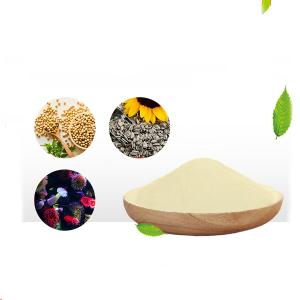
Phospholipids consist of hydrophobic fatty acid chains and hydrophilic phosphate head groups, enabling them to orient at oil–water interfaces. Common sources include soybean phospholipids, sunflower phospholipids, and egg yolk phospholipids. Their structural diversity, polarities, and phase behaviors affect their emulsifying properties in complex food systems such as instant noodles.
3. Functional Roles in Instant Noodle Emulsions
In instant noodle systems, phospholipids are studied for several technical functions:
Oil Dispersibility
Phospholipids help stabilize oil droplets in aqueous phases, which is important for the uniform distribution of seasoning oils in the product.
Interface Stabilization
By forming interfacial layers around oil droplets, phospholipids influence droplet size, prevent aggregation, and improve the stability of emulsions during storage and heat processing.
Compatibility with Multi-Component Systems
Instant noodle emulsions contain proteins, starches, and hydrocolloids. Phospholipids’ interactions with these components are examined to ensure consistent dispersion and minimal phase separation.
Processing Adaptation
Studies evaluate phospholipid behavior under high-shear mixing, extrusion, steaming, and frying processes commonly used in instant noodle production.
4. Evaluation Methods
The dispersibility and functionality of phospholipids in instant noodle emulsions are analyzed using several methods:
Particle Size Analysis: Measures droplet size distribution and uniformity.
Microscopy: Observes oil droplet dispersion and interfacial coating.
Centrifugation and Stability Tests: Assesses phase separation under stress conditions.
Thermal Treatment Simulation: Evaluates emulsion stability under steaming or frying conditions.
Rheological Testing: Measures viscosity and flow behavior related to droplet interactions and emulsion structure.
5. Application Significance
Research on phospholipids in instant noodle emulsions provides insight into the optimization of oil distribution, product stability, and processing consistency. Understanding phospholipid behavior helps in developing formulations with improved emulsion uniformity, enhanced interface control, and reliable performance during both manufacturing and preparation.
6. Conclusion
Phospholipids play a key role as functional components in instant noodle emulsion systems. Their amphiphilic nature allows for effective oil dispersion, interface stabilization, and compatibility with multi-component food matrices. Research on phospholipid behavior supports formulation design and processing optimization in instant noodle production.
Instant noodles are a widely consumed convenience food product that typically contain oil, water, seasoning powders, and noodles. During processing and rehydration, the formation and stability of oil-in-water emulsions are crucial for texture, flavor uniformity, and product consistency. Phospholipids, as amphiphilic molecules, are frequently investigated in the development of emulsion systems in instant noodles due to their ability to influence particle dispersion and interface behavior.
2. Molecular Characteristics of Phospholipids
Phospholipids consist of hydrophobic fatty acid chains and hydrophilic phosphate head groups, enabling them to orient at oil–water interfaces. Common sources include soybean phospholipids, sunflower phospholipids, and egg yolk phospholipids. Their structural diversity, polarities, and phase behaviors affect their emulsifying properties in complex food systems such as instant noodles.
3. Functional Roles in Instant Noodle Emulsions
In instant noodle systems, phospholipids are studied for several technical functions:
Oil Dispersibility
Phospholipids help stabilize oil droplets in aqueous phases, which is important for the uniform distribution of seasoning oils in the product.
Interface Stabilization
By forming interfacial layers around oil droplets, phospholipids influence droplet size, prevent aggregation, and improve the stability of emulsions during storage and heat processing.
Compatibility with Multi-Component Systems
Instant noodle emulsions contain proteins, starches, and hydrocolloids. Phospholipids’ interactions with these components are examined to ensure consistent dispersion and minimal phase separation.
Processing Adaptation
Studies evaluate phospholipid behavior under high-shear mixing, extrusion, steaming, and frying processes commonly used in instant noodle production.
4. Evaluation Methods
The dispersibility and functionality of phospholipids in instant noodle emulsions are analyzed using several methods:
Particle Size Analysis: Measures droplet size distribution and uniformity.
Microscopy: Observes oil droplet dispersion and interfacial coating.
Centrifugation and Stability Tests: Assesses phase separation under stress conditions.
Thermal Treatment Simulation: Evaluates emulsion stability under steaming or frying conditions.
Rheological Testing: Measures viscosity and flow behavior related to droplet interactions and emulsion structure.
5. Application Significance
Research on phospholipids in instant noodle emulsions provides insight into the optimization of oil distribution, product stability, and processing consistency. Understanding phospholipid behavior helps in developing formulations with improved emulsion uniformity, enhanced interface control, and reliable performance during both manufacturing and preparation.
6. Conclusion
Phospholipids play a key role as functional components in instant noodle emulsion systems. Their amphiphilic nature allows for effective oil dispersion, interface stabilization, and compatibility with multi-component food matrices. Research on phospholipid behavior supports formulation design and processing optimization in instant noodle production.