

 CN
CN
Product Categories
--No product--
News
Application of Phospholipids in Plant Oil Paste Emulsion Systems
Time:2025-12-04
Plant oil pastes are semi-solid or paste-like systems primarily composed of plant oils and are widely used in food products, spreads, and plant oil formulations. In these systems, uniform dispersion and stable emulsification are essential for processing performance, texture, and product consistency. Phospholipids, as natural emulsifiers, are commonly applied to improve the emulsion properties of plant oil pastes.
Properties of Phospholipids
Phospholipids are amphiphilic molecules containing both hydrophilic phosphate groups and hydrophobic fatty acid tails, giving them unique functional characteristics:
Interface Activity: Phospholipids form monolayers at oil-water interfaces, reducing interfacial tension.
Emulsifying Capability: They promote uniform dispersion of oil droplets within the paste system.
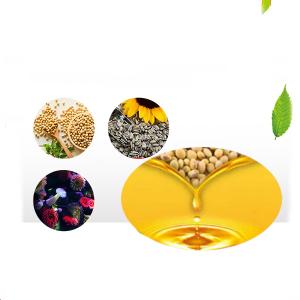
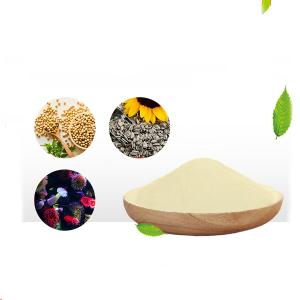
Source Variety: Common sources include soybean lecithin, sunflower lecithin, and egg yolk lecithin, allowing flexible application in different formulations.
Plant Oil Paste Emulsion Systems
Plant oil paste systems typically include:
Oil Phase: Plant oils or blends of vegetable oils.
Water Phase or Hydrophilic Ingredients: Some formulations contain small amounts of water or water-soluble components.
Emulsifier: Phospholipids serve as the main emulsifying agent, ensuring uniform dispersion of oil droplets within the paste.
The stability and dispersibility of oil droplets significantly influence paste spreadability, texture, and appearance.
Role of Phospholipids in Emulsion Systems
Phospholipids contribute to plant oil paste emulsions in several ways:
Oil Droplet Dispersion: Reducing interfacial tension allows oil droplets to disperse more evenly.
System Stability: Formation of interfacial films prevents droplet coalescence and phase separation.
Processing Adaptability: Phospholipids help maintain emulsion consistency during mixing, heating, or homogenization processes.
Application Methods
Phospholipids are incorporated into plant oil pastes through different approaches:
Direct Addition: Adding powdered or liquid phospholipids to the oil or water phase during processing.
Pre-Emulsification: Creating a pre-emulsion of phospholipid and oil or water before mixing into the paste system.
Optimizing Concentration: Adjusting phospholipid dosage based on oil content and water ratio to achieve optimal emulsion properties.
Industrial Relevance
The use of phospholipids in plant oil paste systems supports:
Improved Texture: More uniform and smooth paste consistency.
Enhanced Stability: Minimization of oil droplet aggregation and phase separation during storage.
Processing Optimization: Facilitates efficient manufacturing while maintaining emulsion quality.
Conclusion
Phospholipids demonstrate effective emulsifying and dispersing properties in plant oil paste systems. Their amphiphilic structure stabilizes oil droplets, improves paste uniformity, and supports processing operations. Proper selection and application of phospholipids provide technical advantages in the production and formulation of plant oil pastes, enhancing product consistency and stability.
Properties of Phospholipids
Phospholipids are amphiphilic molecules containing both hydrophilic phosphate groups and hydrophobic fatty acid tails, giving them unique functional characteristics:
Interface Activity: Phospholipids form monolayers at oil-water interfaces, reducing interfacial tension.
Emulsifying Capability: They promote uniform dispersion of oil droplets within the paste system.
Source Variety: Common sources include soybean lecithin, sunflower lecithin, and egg yolk lecithin, allowing flexible application in different formulations.
Plant Oil Paste Emulsion Systems
Plant oil paste systems typically include:
Oil Phase: Plant oils or blends of vegetable oils.
Water Phase or Hydrophilic Ingredients: Some formulations contain small amounts of water or water-soluble components.
Emulsifier: Phospholipids serve as the main emulsifying agent, ensuring uniform dispersion of oil droplets within the paste.
The stability and dispersibility of oil droplets significantly influence paste spreadability, texture, and appearance.
Role of Phospholipids in Emulsion Systems
Phospholipids contribute to plant oil paste emulsions in several ways:
Oil Droplet Dispersion: Reducing interfacial tension allows oil droplets to disperse more evenly.
System Stability: Formation of interfacial films prevents droplet coalescence and phase separation.
Processing Adaptability: Phospholipids help maintain emulsion consistency during mixing, heating, or homogenization processes.
Application Methods
Phospholipids are incorporated into plant oil pastes through different approaches:
Direct Addition: Adding powdered or liquid phospholipids to the oil or water phase during processing.
Pre-Emulsification: Creating a pre-emulsion of phospholipid and oil or water before mixing into the paste system.
Optimizing Concentration: Adjusting phospholipid dosage based on oil content and water ratio to achieve optimal emulsion properties.
Industrial Relevance
The use of phospholipids in plant oil paste systems supports:
Improved Texture: More uniform and smooth paste consistency.
Enhanced Stability: Minimization of oil droplet aggregation and phase separation during storage.
Processing Optimization: Facilitates efficient manufacturing while maintaining emulsion quality.
Conclusion
Phospholipids demonstrate effective emulsifying and dispersing properties in plant oil paste systems. Their amphiphilic structure stabilizes oil droplets, improves paste uniformity, and supports processing operations. Proper selection and application of phospholipids provide technical advantages in the production and formulation of plant oil pastes, enhancing product consistency and stability.