

 CN
CN
The anti-aging effect of hydroxytyrosol in cosmetics
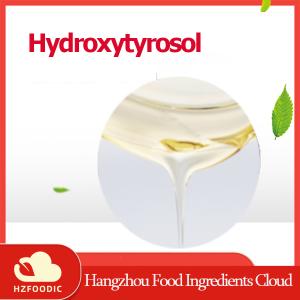
Time:2025-08-11Hydroxytyrosol, a natural phenolic compound derived from olive leaves and fruits, is widely used as an anti-aging ingredient in cosmetics due to its potent antioxidant activity and biocompatibility. Its anti-aging mechanisms and safety can be analyzed as follows:
I. Anti-Aging Mechanisms
Powerful Antioxidation and Free Radical Scavenging
Hydroxytyrosol contains multiple phenolic hydroxyl groups in its molecular structure, endowing it with strong electron transfer capacity. It can efficiently scavenge reactive oxygen species (such as superoxide anions and hydroxyl radicals) generated in skin cells due to ultraviolet radiation and environmental pollution, blocking oxidative damage to cell membrane lipids, proteins, and DNA. Studies have shown that its antioxidant capacity is more than 10 times that of vitamin E, which can reduce oxidative breakage of skin collagen fibers and delay the formation of wrinkles.
Inhibition of Matrix Metalloproteinases (MMPs)
The core of skin aging lies in the degradation of collagen and elastin, and MMPs are key enzymes responsible for this process. Hydroxytyrosol can downregulate the gene expression of MMPs (e.g., MMP-1, MMP-3), reducing their decomposition of collagen fibers. Meanwhile, it promotes fibroblasts to synthesize new collagen, maintaining skin elasticity and firmness.
Anti-Inflammation and Repair of Photo-Damage
Chronic inflammation is an important driver of skin aging. Hydroxytyrosol can inhibit the release of inflammatory factors (e.g., TNF-α, IL-6), alleviating UV-induced inflammatory reactions such as skin erythema and edema. In addition, it can enhance the DNA repair ability of skin cells, reduce the risk of cell mutation caused by ultraviolet rays, and prevent problems like pigmentation and roughness induced by photoaging.
Regulation of Cellular Antioxidant Systems
Hydroxytyrosol can activate the antioxidant enzyme system in skin cells (e.g., superoxide dismutase SOD, glutathione peroxidase). Through "internal and external synergy", it strengthens the skin's own antioxidant defense capacity. Long-term use can improve the skin's resistance to environmental stimuli.
II. Safety Evaluation
Skin Irritation and Sensitization
Derived from natural plants, hydroxytyrosol has high biocompatibility. Multiple skin patch tests have shown that at the commonly used concentration in cosmetics (0.1%-1%), it causes no obvious irritation to normal or sensitive skin, with an extremely low sensitization rate (<0.01%), much lower than that of synthetic antioxidants (e.g., BHA, BHT). Its small molecular size and good water solubility allow it to penetrate the skin barrier without accumulating in the stratum corneum, reducing the risk of irritation.
Cytotoxicity and Genetic Safety
In vitro cell experiments have demonstrated that hydroxytyrosol, within the effective concentration range, is non-toxic to skin keratinocytes and fibroblasts; on the contrary, it can promote cell proliferation and viability. Genetic toxicity tests (e.g., Ames test) have confirmed that it has no mutagenicity and will not cause cell DNA damage, ensuring safety for long-term use.
Compatibility with Other Ingredients
Hydroxytyrosol has good stability and is not easily degraded in cosmetic systems with pH 4-8. It can synergize with common anti-aging ingredients such as vitamin C, retinol, and hyaluronic acid without triggering chemical reactions or reducing mutual activity. However, it should be avoided to be combined with high-concentration strong acid ingredients (e.g., high-concentration fruit acids) to prevent excessive protonation of phenolic hydroxyl groups, which may affect its efficacy.
Regulations and Application Restrictions
Hydroxytyrosol has been recognized as a safe cosmetic raw material by institutions such as the European Union and the US FDA. China's Cosmetic Safety Technical Specification does not set usage limits for it. However, due to its high cost, the concentration in practical applications is usually controlled within 0.5% to ensure efficacy while balancing economy.
III. Practical Applications and Advantages
In cosmetics, hydroxytyrosol is commonly found in serums, creams, and sunscreen products, especially suitable for functional products targeting anti-wrinkle, repairing photoaging, and improving skin dullness. Compared with other antioxidant ingredients, its advantages are:
It integrates multiple effects including antioxidation, anti-inflammation, and repair promotion, with a more comprehensive anti-aging mechanism;
Being naturally derived, it has high consumer acceptance, conforming to the "green skincare" trend;
It has better stability than most plant polyphenols (e.g., tea polyphenols) and can withstand high-temperature processes in cosmetic production and long-term storage.
Hydroxytyrosol exhibits significant anti-aging effects in cosmetics through multiple mechanisms such as antioxidation, inhibition of collagen degradation, and anti-inflammation. It also features low irritation and high compatibility, with fully verified safety. With the growing demand for natural ingredients, its application in high-end anti-aging skincare products will further expand. In the future, after improving skin permeability through nano-carrier technology, its efficacy is expected to be more fully exerted.